Tent Caterpillars
Here is a link to the life cycle and biological control. WSU page – Tent Caterpillars
Here is a link to the life cycle and biological control. WSU page – Tent Caterpillars
Posted in Meeting Notes
A timely topic for our June meeting!
Presented by Bart Berg of Bart Berg Landscape LLC.
The talk will be based on the different methods to irrigate fruit trees and the irrigation fixtures to achieve that. Also, water sources and distribution of water for accessibility.
The Bainbridge Island Fruit Club’s Monthly Meeting is JUNE 18th from 6:30pm to 8:30pm and will be held at the Bainbridge Grange Hall.
Location Address: 10340 Madison Ave NE, Bainbridge Island, WA 98110
This is an all ages, free meeting.
Bring a snacks to share if you can.
We hope to see you all there!
Posted in Meeting Notes
The Bainbridge Island Fruit Club’s Monthly Meeting is April 16th from 6:30pm to 8:30pm and will be held at the Bainbridge Grange Hall.
Location Address: 10340 Madison Ave NE, Bainbridge Island, WA 98110
This month’s meeting topic is Fruit Tree Pathogens and Pests presented by Randy Lee. Randy is a member of the Snohomish County Fruit Society (Chapter of the Western Cascade Fruit Society).
This is an all ages, free meeting. We hope to see you there!!
Posted in Meeting Notes
There is a new pest alert posted on our link: Pest Alerts
Posted in alerts, news & alerts
Tagged Bainbridge Island Fruit Club, Brown Marmorated Stink Bug, pest alert
Due to popular demand we will continue the topic of fruit tree grafting!
The next Bainbridge Island Fruit Club Meeting is March19th from 6:30pm to 8:30pm and will be held at the Bainbridge Grange Hall, 10340 Madison Ave., NE
This meeting’s agenda will focus on fruit tree grafting. As with the last meeting, folks are encouraged to bring bare rooted fruit trees (e.g., Costco specials for example) for grafting to making their own multi-variety trees!! We will have a large selection of apple, plear, plum, and cherry scion wood for grafting. There will also be some smaller rootstocks (2 feet long) for doing one variety grafting of apple and maybe pear. There will probably be a small fee for the rootstock (as it had to be purchased), but all the scion wood is free.
We also want to start implementing a plant donation/sale as a way to raise funds for the clubs. Members are encouraged to bring their extra flowers, bulbs, fruit trees, etc. to the meeting. Other attendees can take home…in exchange for whatever $ they want to donate to the club.
This is an all ages, and free meeting with the exception of any rootstock purchases. Membership opportunities are available.
We hope to see you there!!
Posted in Meeting Notes
from Darren Murphy, Club President
Propagation by taking branch cuttings is a method of cloning a mature tree to produce additional specimens. Fruit trees cuttings are required when the fruit is a seedless variety or you need a fast propagation method. Propagate fruit trees by taking softwood cuttings in late spring through early summer or semi-hardwood cuttings in mid summer to late summer. Softwood cuttings are fragile and dry out quickly, but produce roots quickly when placed in the proper environment.
Step 1
Cut a six-inch softwood or hardwood branch section of the fruit tree with a sharp knife. Take softwood cuttings from the end portion of the branch where the stem is beginning to mature and snaps in half when bent. Take semi-hardwood cuttings from the end portion of the branch where the stem is becoming woody and beginning to harden.
Step 2
Purchase rooting medium or create your own by mixing equal amounts of course sand, sterile peat moss and perlite. Add water to the medium to moisten. Fill a rooting tray with the moist medium.
Step 3
Cut off all leaves from the lower half of the fruit tree cutting with a sharp knife. Pour a small amount of powdered rooting hormone onto a piece of waxed paper. Dip the cut end of the branch cutting into the hormone and gently tap to remove excess.
Step 4
Stick the fruit tree cutting into a rooting tray filled with moist rooting medium to a depth of two to three inches. Tamp the medium around the cutting to hold it in place. Place the cuttings in the tray so the leaves are not touching.
Step 5
Mist the cuttings with water and place a clear plastic bag over top of the tray. Secure the covering closed with a rubber band. Set the rooting tray in an area that has indirect, bright sunlight and maintains a temperature of approximately 70 degrees Fahrenheit.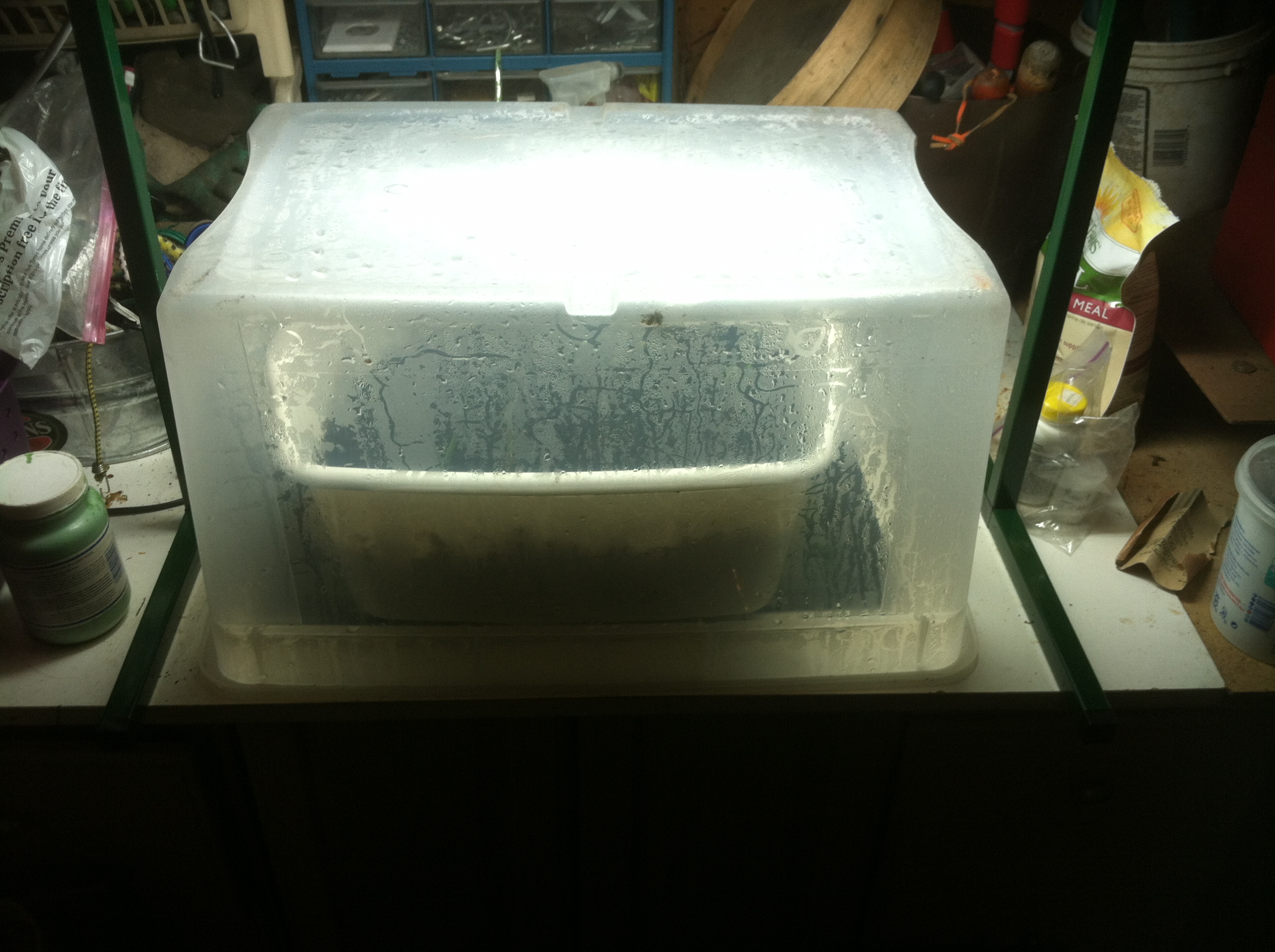
Step 6
Pull on the softwood tree cuttings after three weeks of growth to see if there is resistance from root formation. Pull on semi-hardwood cuttings after six weeks of growth. Continue to grow the fruit tree cuttings until the roots reach a length of one inch. Gently remove the soil around the stem cutting to observe root formation and length.
Step 7
Transplant all cuttings with one inch or longer roots into individual growing pots. Fill the pots with a sterile potting soil moistened with water. Gently remove the rooting cuttings from the tray and plant one in each growing pot at the same depth it was previously growing.
Step 8
Grow the transplanted fruit tree cuttings indoors for a minimum of one year. Transplant the cuttings outdoors the following spring season.
References
North Caroline State University: Plant Propagation with Stem Cuttings
Washington State University: Propagating Deciduous and Evergreen Shrubs, Tree and Vines
This was kindly sent to us from Stephen Phillips, The Vice President of Bainbridge Island Fruit Club. I am anxious to try it out.
Pruning 101
Some people are intimidated by pruning. The expert advice can be confusing so I put this together and hope it helps.
I have links below to some really excellent resources on pruning fruit trees. If you know of others, let me know and I’ll try to add them to the list. As to the confusing or conflicting part- Growing conditions and weather are a part, goals and resources of commercial and backyard orchardists differ, and cultural differences between pomme and stone fruit, as well as differing vigor of various root stocks affect growth habits. Finally young trees are handled differently than old trees. A few basic principles may be helpful in understanding the experts advice. I am commenting here on healthy apples in the maritime northwest.. Radically pruning mature or badly diseased trees is a special case for another time.
Basic principles
Periodic pruning is a necessary activity, not an option. Each cut will influence the future development of the tree. Its shape, production and vigor, the quantity and size of fruit. Trees which are not pruned will produce smaller and lower quality fruit.
-Branches which don’t get sunlight won’t produce much or any fruit. Thinning the upper branches helps get light down to the lower ones.
-Generally speaking vertical branches will produce leaves but not much fruit, horizontal branches will produce the most fruit, and drooping branches are not as good as gently rising ones. UC Davis suggests a 45 degree angle for branches coming off of the trunk.
How the tree grows-
-Auxin (Indole Acetic Acid ) is a chemical produced by the terminal bud of a branch. It causes the branch to elongate, and make side buds. It seems that high concentrations of IAA inhibit the growth of the side budson the stem. Pruning the the end bud on a branch eliminates the source of auxin. The side lateral shoot, just below it is no longer inhibited, and starts producing its own auxin. It becomes the dominant bud and that is the direction the branch will start growing . Terminal cuts farther away from a lateral will tend to promote lateral growth over several buds going down the stem . Authors differ on how far down the branch this continues. Somewhere between 8 and 16 inches Keep this in mind when you are choosing where to prune.
When to prune:
When you prune will also have implications. Diseased and structurally unsound wood should be taken out whenever you notice it. Cutting it out controls disease spread, and directs nutrition airflow and sunlight to the remaining branches. Very narrow crotches will generally become a problem, and they should be removed before they split. When you do the other pruning will depend on your priorities. Advocates of winter pruning note that it is easier to see the branches when the tree is dormant and many of us have more time in the winter. Summer pruners say it is more enjoyable and faster to do it in the summer while you are thinning the fruit. The effect on the tree is different as well.
Winter pruning tends to promote a vigerous flush of new growth the following spring. These water sprouts produce leaves, not fruit and should be removed.
Summer pruning limits the growth of the tree and minimizes water sprouting- The spring growth spurt has come and gone, and reducing the leaf canopy in the summer limits the amount of nutrition available to be stored which controls growth. This dwarfing effect diminishes as the summer progresses. There is also research suggesting that early summer pruning can increase flower bud set. Since the flower buds set this year will become flowers the next year, this may be a help with apple varieties which tend toward biennial fruiting. It seems that this pruning should be done within 8 weeks of bloom.
What to cut off?
Although the trend in eastern Washington orchards commercial orchards is to use a V type which looks almost like an espaliered hedge from a distance, our area seems to favor more traditional tree shapes either the central leader or the open vase systems.
Here are some links :
Simplified pictures, descriptions of the systems: http://www.groworganic.com/organic-gardening/articles/pruning-fruit-trees-choose-training-shapes-for-apple-peach-cherry-trees
Excellent e-booklet http://content.ces.ncsu.edu/training-and-pruning-fruit-trees-in-north-carolina.pdf
How much to take off? Orchardists with grown trees tell me that taking off about 20% of the new growth in our area is about right with apples. Stone fruit with their more vigorous growth and different laterals, should have about 50% taken off.
UC Davis excellent overview of pruning fruit trees:
http://homeorchard.ucanr.edu/The_Big_Picture/Pruning_&_Training/
Hope this helps
Steve
Other interesting somewhat related links:
A very old and comprehensive discussion of grafting techniques
http://archive.org/stream/artgraftingandb01baltgoog#page/n162/mode/2up
Apical dominance:
http://plantphys.info/apical/apical.html
Electron microscopy of flower/pollen and fruit set http://fruitandnuteducation.ucdavis.edu/files/162093.pdf
Good photos of different stages of flower development
http://county.wsu.edu/chelan-douglas/agriculture/treefruit/Pages/Apple.aspx
This is an excellent ‘how to’ on planting fruit trees from Steve Butler of the Peninsula Fruit Club.
Now is the time to plant fruit trees. Several members asked how you go about it.
I dig a hole 36-48″ around, then down at least 18″. I plant the tree, taking time to unwind the roots and layering them in the soil (roots grow at different levels on the rootstock). I then back fill with the soil that came out of the hole. Now take a hold of the rootstock/tree union and pull upwards, till the union is at least 5-6″ above the soil. Take you hands with fingers facing down and push in the soil around the roots in 4-5 locations around the tree. Now pull in more soil till the hole is filled. No reason this time of the year to make a basin, as it will rain for the next three months. Then stake your new tree using a loose tie. You can make them from bread bags.
The end of May, give your new trees a 1/2 cup of 10-20-20 around the drip line. Next year repeat, but a full cup. Keep grass away from the tree for at least two years.
Pluck any blossoms that appear the first year of planting. Second year after planting you can have 5 fruit or so.
I have planted 100’s of trees this way and been very successful.
Costco has some great trees from Willow Drive Nursery this year for a great price.
Enjoy, Steve Butler
Posted in Meeting Notes
Posted in Meeting Notes
Last night’s meeting was great! Darren talked about grafting apparently he’s been doing it since he was 6 years old! He brought in bunches of scion bundles, tools and gave us tips. We practiced making the right cuts and taping two different pieces together. We learned the best time to graft was February and March depending on the variety and if a flower forms on a scion the first year to take it off because it competes for valuable energy.
Posted in Meeting Notes
 Bainbridge Island Fruit Club